
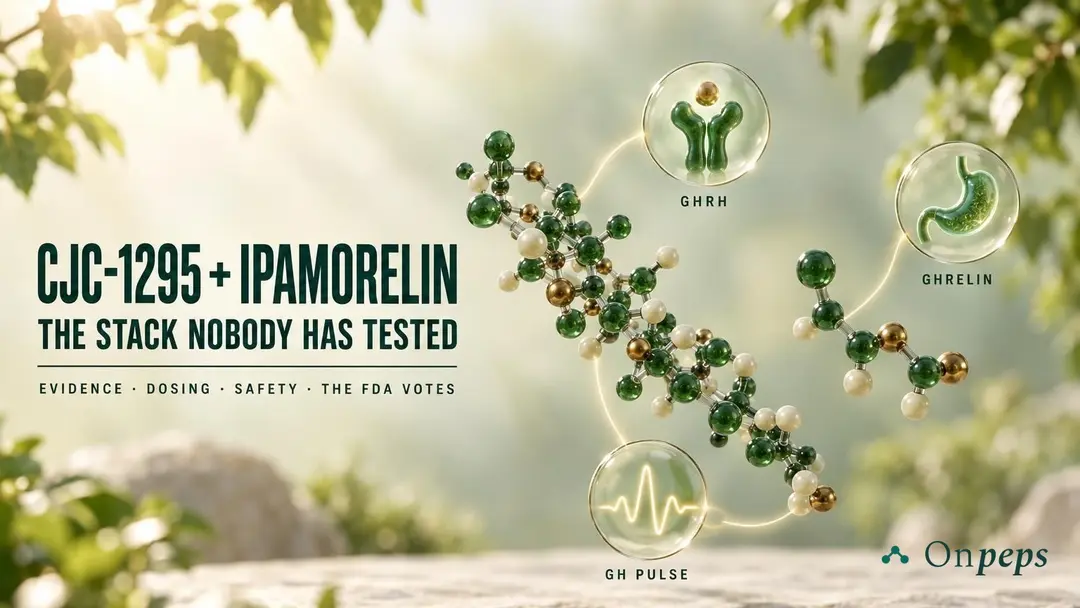
CJC-1295 and ipamorelin do what the pharmacology says. Each one, alone, raises growth hormone and IGF-1 in healthy adults, and that has been measured properly. The idea of combining a GHRH analogue with a ghrelin mimetic is sound, and nobody serious disputes it.
Everything after that is inference
The combination has never been tested in a human. The short-acting CJC-1295 that goes into the syringe has never been tested in a human in any form. Neither compound has a single study measuring muscle, fat, recovery, or sleep in a person, and the one long trial of a related compound found a kilogram of lean mass, no change in strength, more hunger, and worse glucose. The two patient trials that were run ended with a negative result and a death, and both programmes were abandoned by the companies that owned them.
Then there are the votes
This is not a compound the regulator has ignored. It is two compounds the regulator’s expert panel examined, in public, with the industry making its best case in the room, and rejected 0 to 12 and 0 to 13. The April 2026 thaw that put BPC-157 and TB-500 on a path to legal compounding left these two exactly where they were, and no meeting is scheduled to revisit them.
If you are going to use it anyway
The things the evidence tells you to do are few and specific: get a fasting glucose and an IGF-1 before you start and again at three months; do not use it with any cancer history; use enough water that you can actually measure the dose; and buy from a source whose certificates other people have checked.
Conclusion
The stack’s scientific case is an extrapolation from hormone curves to body composition, and nobody has ever checked whether the extrapolation holds.