
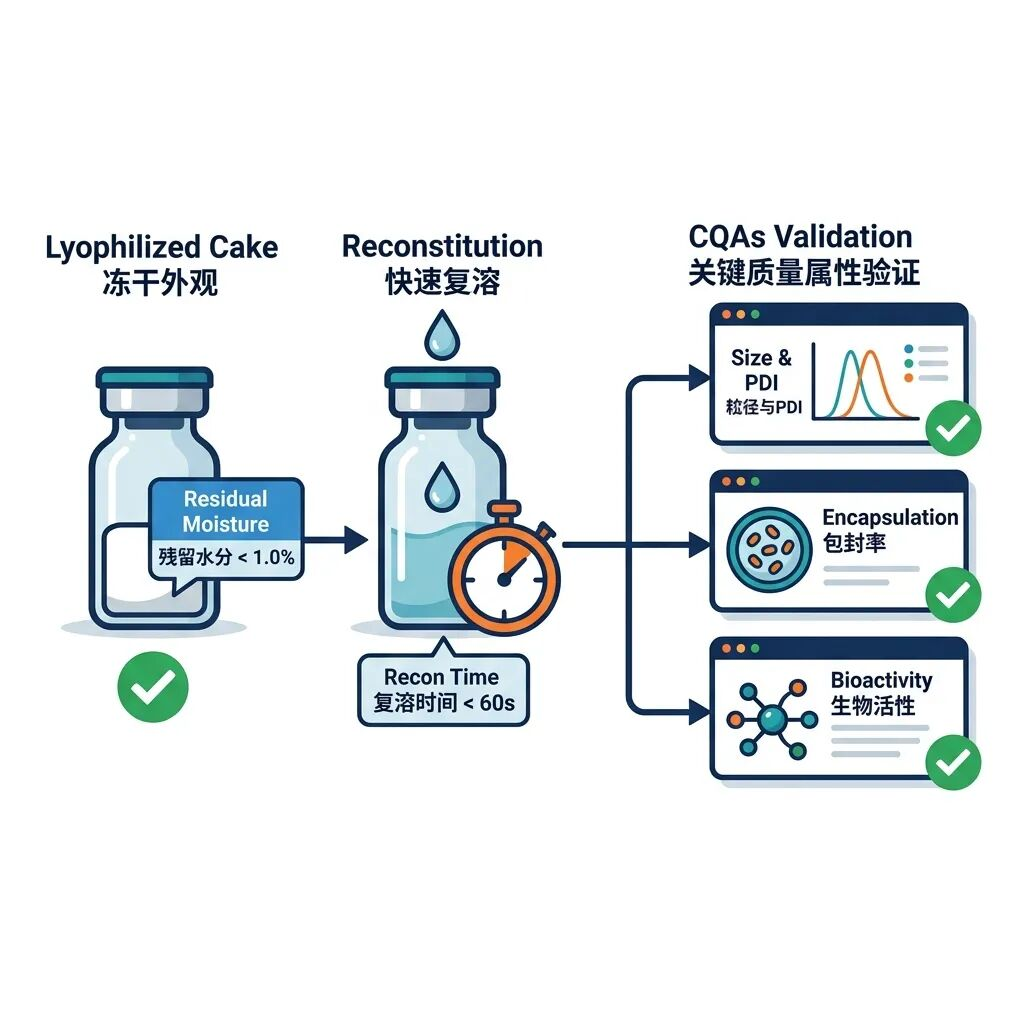
In peptide use, lyophilized peptides and pre-mixed liquids are two common forms. Lyophilized peptides can remain stable for years in a frozen state, while pre-mixed liquid formulations degrade rapidly upon exposure to water and lose efficacy. This is why most research peptides are supplied as lyophilized powders.
Advantages of lyophilization
Lyophilization (freeze-drying) removes water through sublimation, keeping the peptide stable in solid form. This process reduces hydrolysis and oxidation reactions, extending shelf life. For unstable peptides, lyophilization is a key process for preserving activity.
The role of bacteriostatic water
Reconstitution is the key step in using lyophilized peptides. Bacteriostatic water contains 0.9% benzyl alcohol, which prevents bacterial growth and keeps the peptide sterile for a refrigerated shelf life of 14 to 28 days, allowing multiple uses. Without bacteriostatic water, peptides reconstituted with sterile water typically last only a short time under refrigeration.
Key points for reconstitution
The preparation process requires bacteriostatic water, clean syringes, and proper technique. Improper handling can destroy peptide activity before injection. For example, rapidly injecting water directly onto the powder, vigorous shaking, or using unclean equipment can all affect the structural integrity of the peptide.
Proper practice usually includes: letting bacteriostatic water flow slowly down the vial wall, gently rotating or rolling the vial to dissolve, avoiding vigorous shaking, and checking whether the solution is clear after dissolution.
Storage conditions
Unreconstituted lyophilized peptides should be stored in a cool, dry, dark place, with freezing considered for long-term storage. Reconstituted peptides should be refrigerated and used within the recommended timeframe. Repeated freeze-thaw cycles may also affect peptide stability.
Conclusion
Reconstitution is not simply “adding water” — it is a critical step that affects peptide stability and activity. Understanding the difference between lyophilized and liquid forms, and mastering proper reconstitution and storage, is fundamental to safe peptide use.