
BPC-157 and Angiogenesis: VEGF, Vascular Repair, and Tissue Blood Supply
Key Points
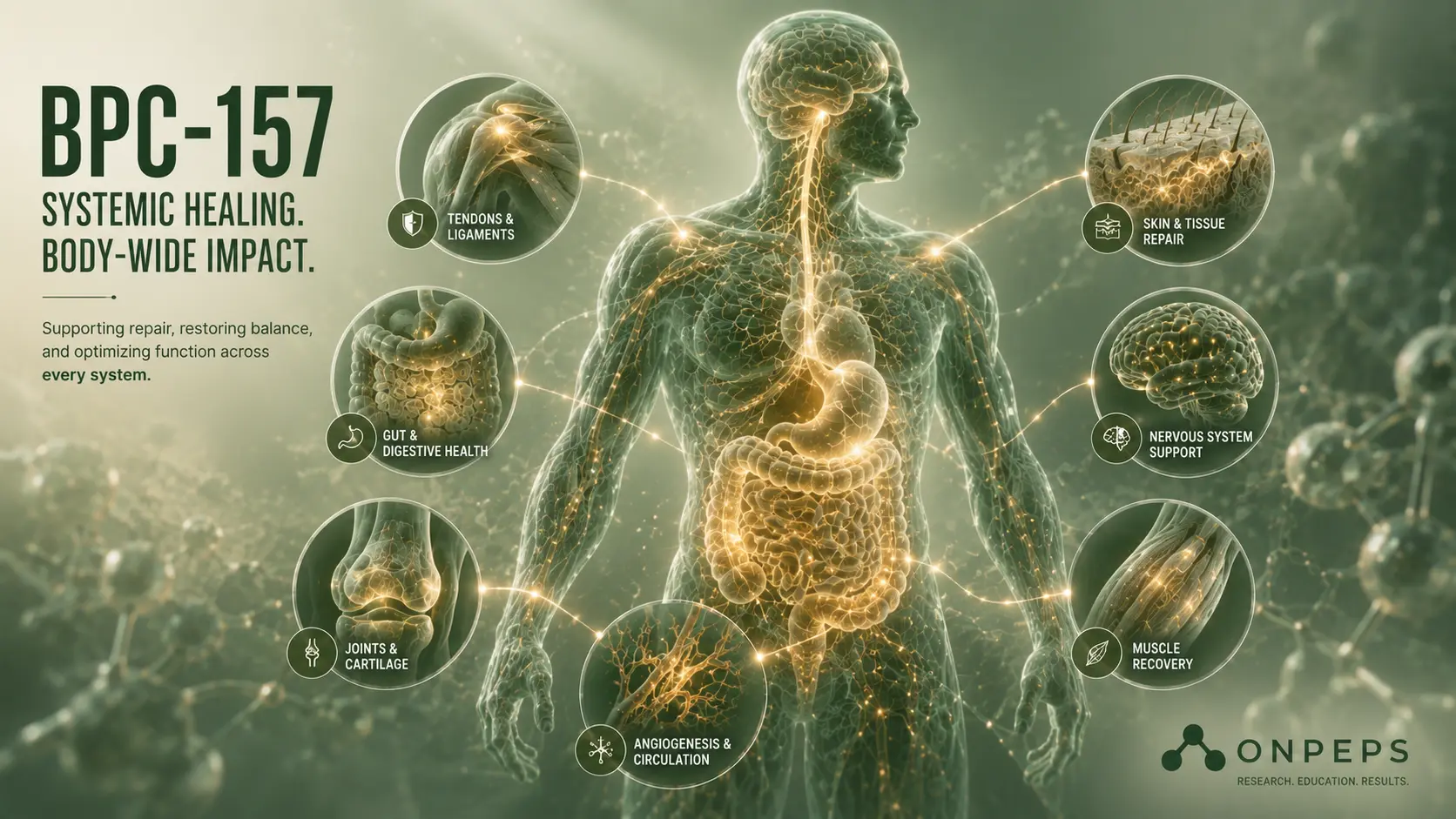
One of the most consistent findings in animal research is that BPC-157 helps generate new blood vessels.
It can trigger the body to form new capillary networks, rapidly increasing blood flow to damaged or oxygen-deprived tissue.
This improvement in blood circulation is considered a major reason it accelerates healing of deep wounds and injuries.
Human evidence remains limited, and BPC-157 is still an unapproved experimental compound.
1. What Is Angiogenesis?
Angiogenesis is the process by which the body forms new blood vessels. It plays a key role in wound healing, tissue repair, and oxygen supply.
When tissue is damaged or deprived of oxygen, the body initiates angiogenesis to deliver more blood, oxygen, and nutrients to that area.
If angiogenesis is insufficient, wound healing slows down and tissue repair is affected.
2. BPC-157 and Angiogenesis
Yes, one of the most consistent findings in animal research is that BPC-157 helps generate new blood vessels.
It can trigger the body to form new capillary networks, rapidly increasing blood flow to damaged or oxygen-deprived tissue.
This improvement in blood circulation is considered a major reason it accelerates healing of deep wounds and injuries.
3. BPC-157 and VEGF
VEGF stands for vascular endothelial growth factor, a key signaling molecule that regulates angiogenesis.
Animal research suggests that BPC-157 may promote angiogenesis by influencing the VEGF pathway.
But the exact mechanism is still being studied. It is currently unclear whether BPC-157 acts directly on VEGF or indirectly influences angiogenesis through other signaling pathways.
4. Vascular Repair and Endothelial Stabilization
Proposed preclinical mechanisms include:
Endothelial repair
Nitric oxide signaling interactions
Vascular protection
These mechanisms currently come mainly from animal research and have not been fully validated in humans.
5. Why This Mechanism Matters
Angiogenesis and vascular repair are among the key mechanisms by which BPC-157 is thought to be linked to tissue healing.
If BPC-157 does promote new blood vessel formation, it may help accelerate wound healing, improve tissue blood supply, and play a role in ischemic injury environments.
But it must be emphasized: most current evidence comes from animal research, and human evidence remains limited.
6. Summary
BPC-157 and angiogenesis is one of the most consistent directions in animal research.
The current situation is:
First, animal research shows it may promote new blood vessel formation.
Second, it may act by influencing the VEGF pathway.
Third, vascular repair and endothelial stabilization are proposed preclinical mechanisms.
Fourth, human evidence remains limited.
Frequently Asked Questions
Can BPC-157 affect VEGF and angiogenesis?
Animal research suggests that BPC-157 may help generate new blood vessels and may act by influencing the VEGF pathway. But the exact mechanism is still being studied.
Why is angiogenesis important for tissue healing?
Angiogenesis delivers more blood, oxygen, and nutrients to damaged tissue, accelerating wound healing and tissue repair.
Is there human evidence for these angiogenic effects?
Currently, mainly animal research. Human evidence remains limited, so this cannot be regarded as clinical fact.
Can BPC-157 improve tissue blood supply?
Animal research shows it may increase blood flow to damaged or oxygen-deprived tissue, but human data is still lacking.